
Taking One Step at a Time
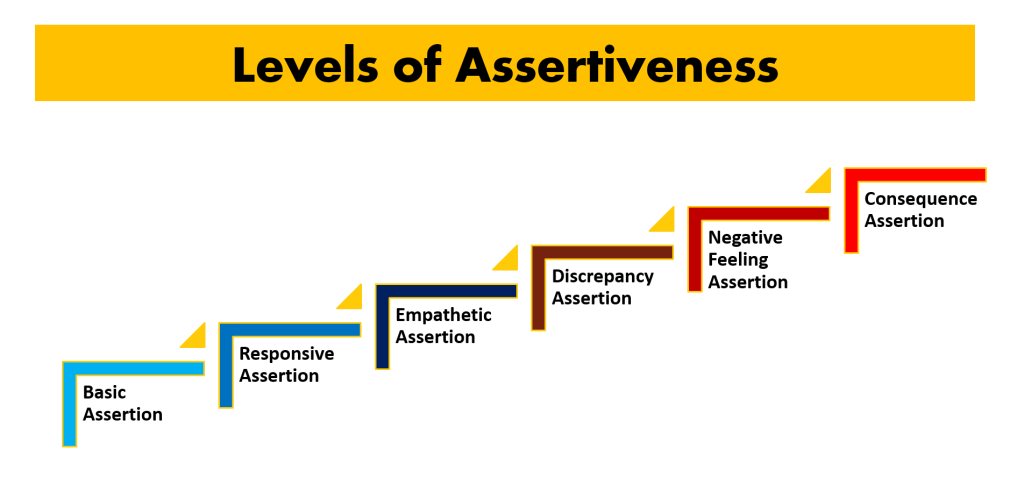
Mastering assertiveness takes practice and self-awareness.
By starting with basic assertion and gradually moving through these levels, you can build confidence in expressing yourself effectively without compromising relationships. Each level equips you with the skills to handle different situations assertively, promoting clear communication and mutual respect in the workplace.
Basic Assertion
Example : “I need you to keep up with our project deadlines.”
Basic assertion involves straightforwardly stating your needs or concerns without being aggressive or defensive. It’s about being clear and direct in your communication, ensuring that your message is understood.
Responsive Assertion
Example : “Thank you for sharing your perspective. But we must deliver on our commitments to the client.”
Responsive assertion adds a layer of acknowledgement and understanding while expressing your own needs or concerns. It shows that you value others’ viewpoints while also advocating for yourself.
Empathetic Assertion
Example : “I understand that it’s difficult to manage two projects simultaneously. But I need you to consider this one as top priority.”
Empathetic assertion acknowledges the feelings and needs of others while asserting your own priorities. It fosters a respectful dialogue where both parties’ perspectives are considered.
Discrepancy Assertion
Example : “We all collectively decided on these timelines in the last meeting. I think we should stick to that decision.”
Discrepancy assertion highlights a discrepancy between what was agreed upon and current actions or decisions. It aims to clarify misunderstandings and realign everyone’s efforts towards common objectives.
Negative Feeling Assertion
Example : “You insisting so much is making me feel like I made a wrong decision when selecting the team for this project.”
Negative feeling assertion involves expressing how specific actions or behaviors impact you emotionally. It focuses on the consequences of certain behaviors while encouraging constructive dialogue.
Consequence Assertion
Example : “ If you really can’t keep up with the deadlines, then I’d be left with no option but to replace you. I’d prefer not to.”
Consequence assertion outlines the potential outcomes or consequences of certain actions or decisions. It emphasizes accountability and encourages proactive problem-solving.
Remember, assertiveness is about finding your voice while respecting others’ perspectives. So, start with Basic Assertion, and only if you are unable to reach positive results through the lower level assertions, should you move to the higher levels. The idea is to use the minimum level of assertion to achieve the desired outcome.